MiGiC Saturator · MS-5 · in the works
Five circuits of analogue colour.
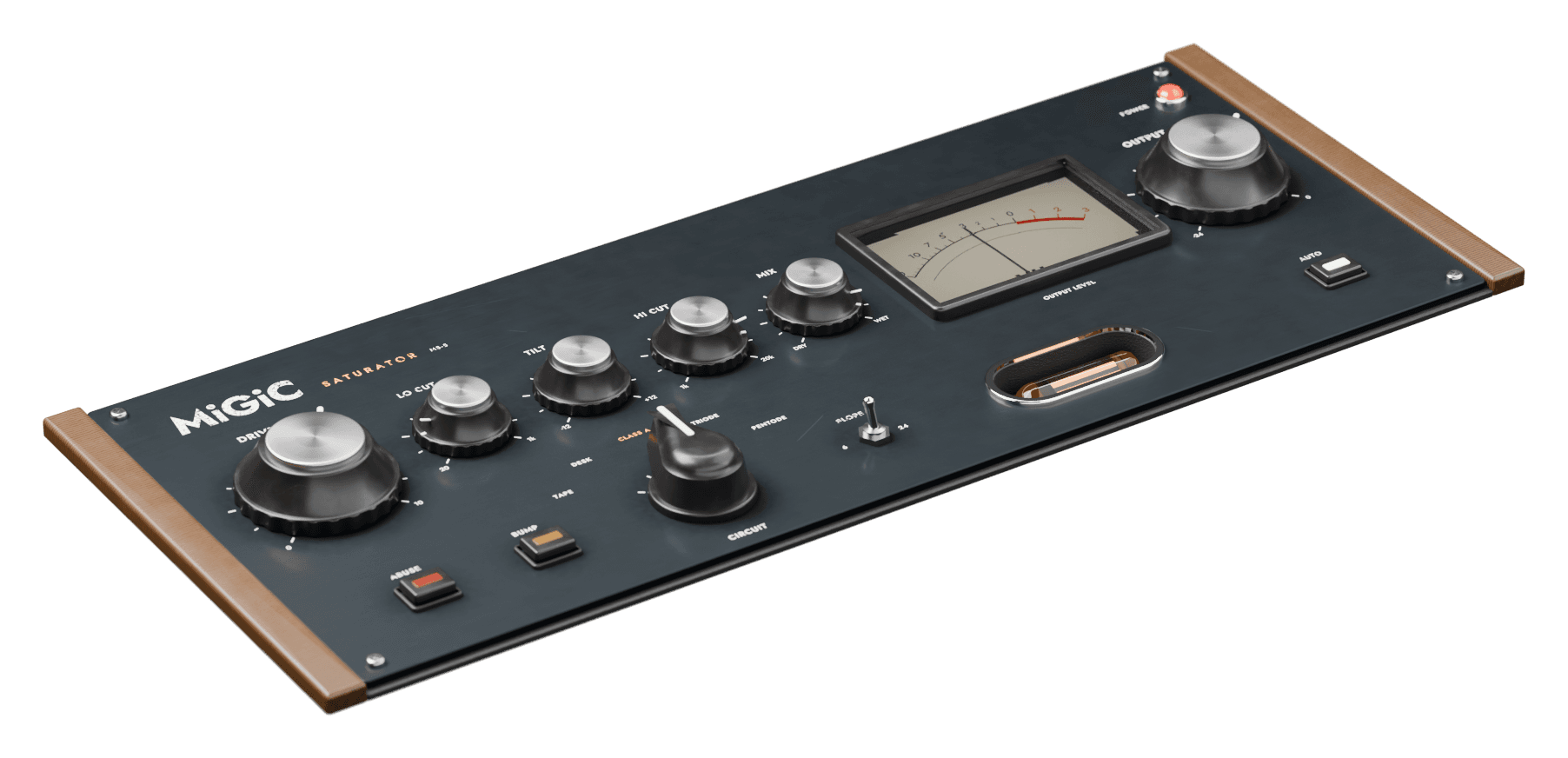
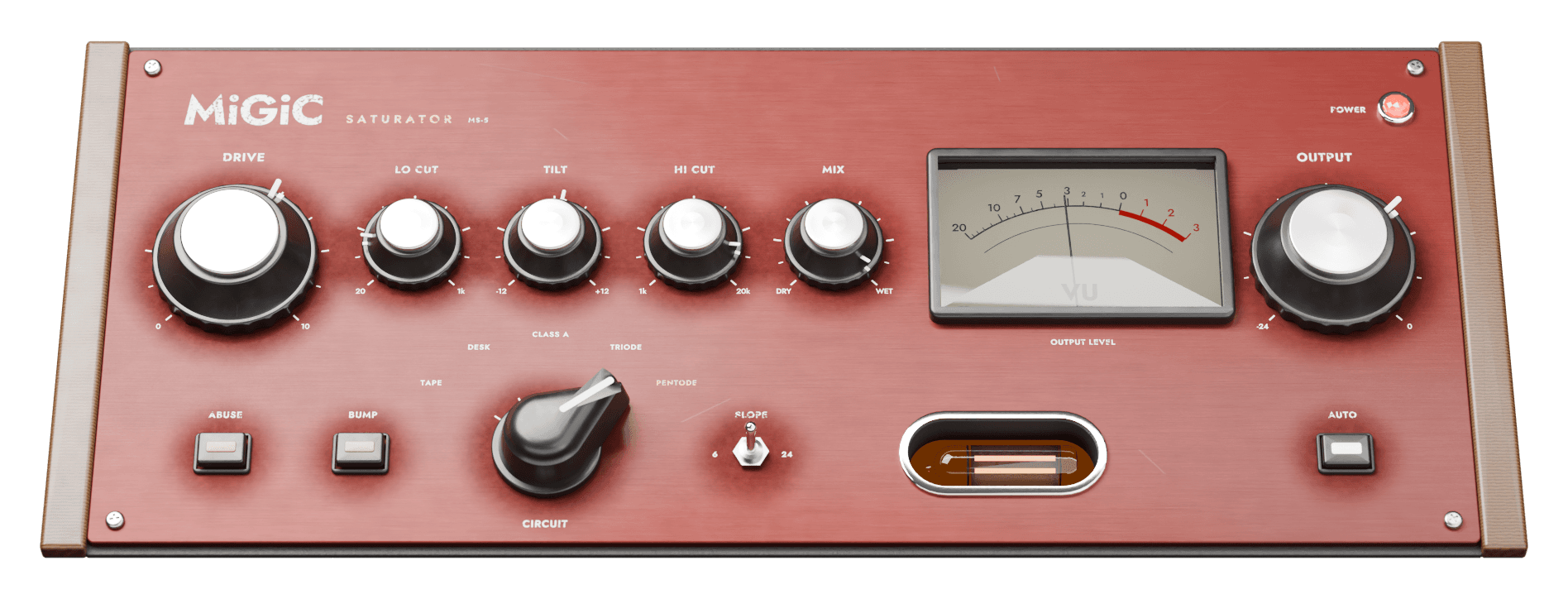
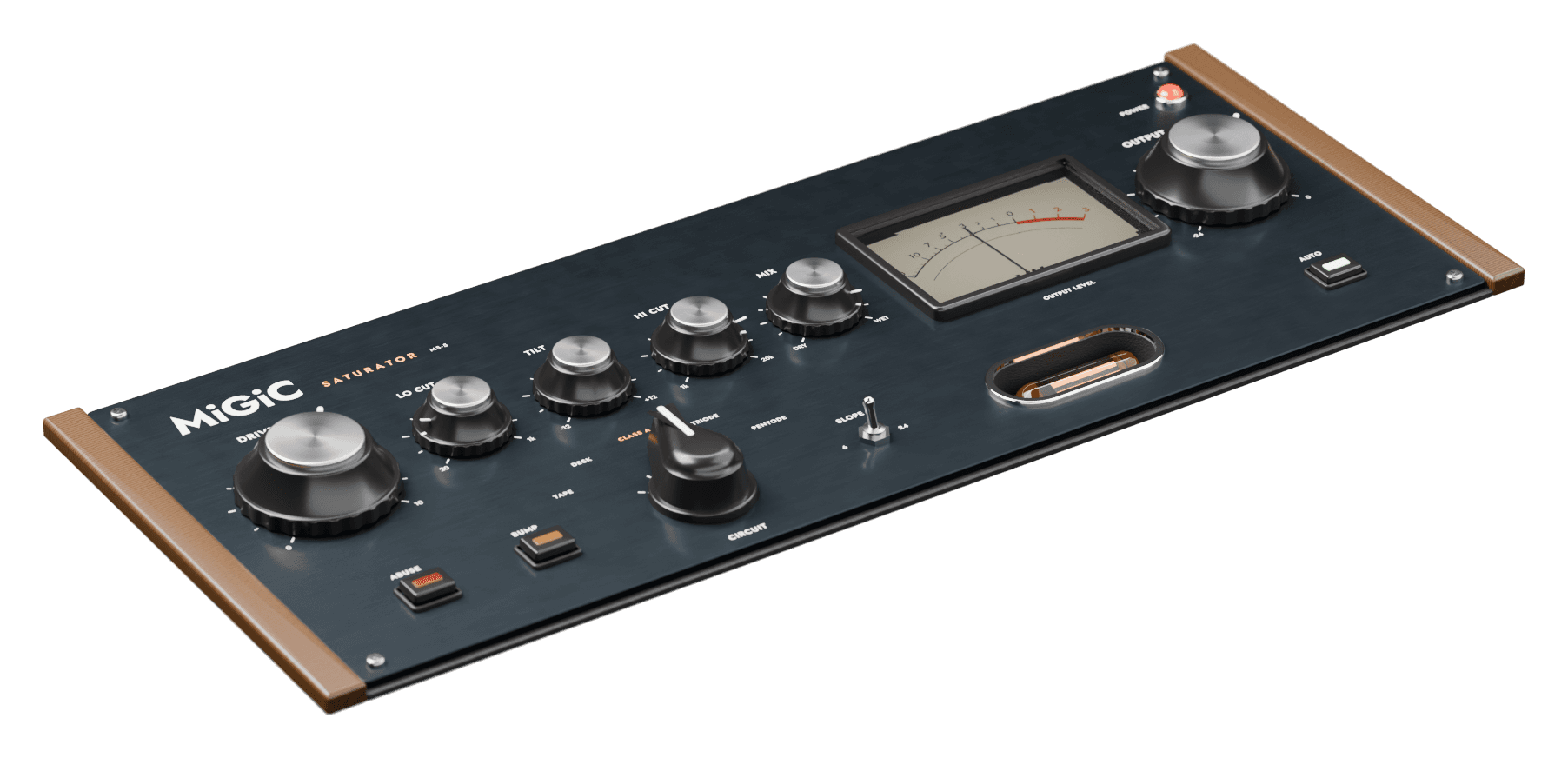
Pick a circuit and turn DRIVE up; AUTO keeps the level where it was. The five circuits are learned from measurements of analogue gear, tape machines, console stages and valves, each sitting between filters that are exact tables. The panel is a rendered object, road worn by default and showroom clean from the menu.
Up close
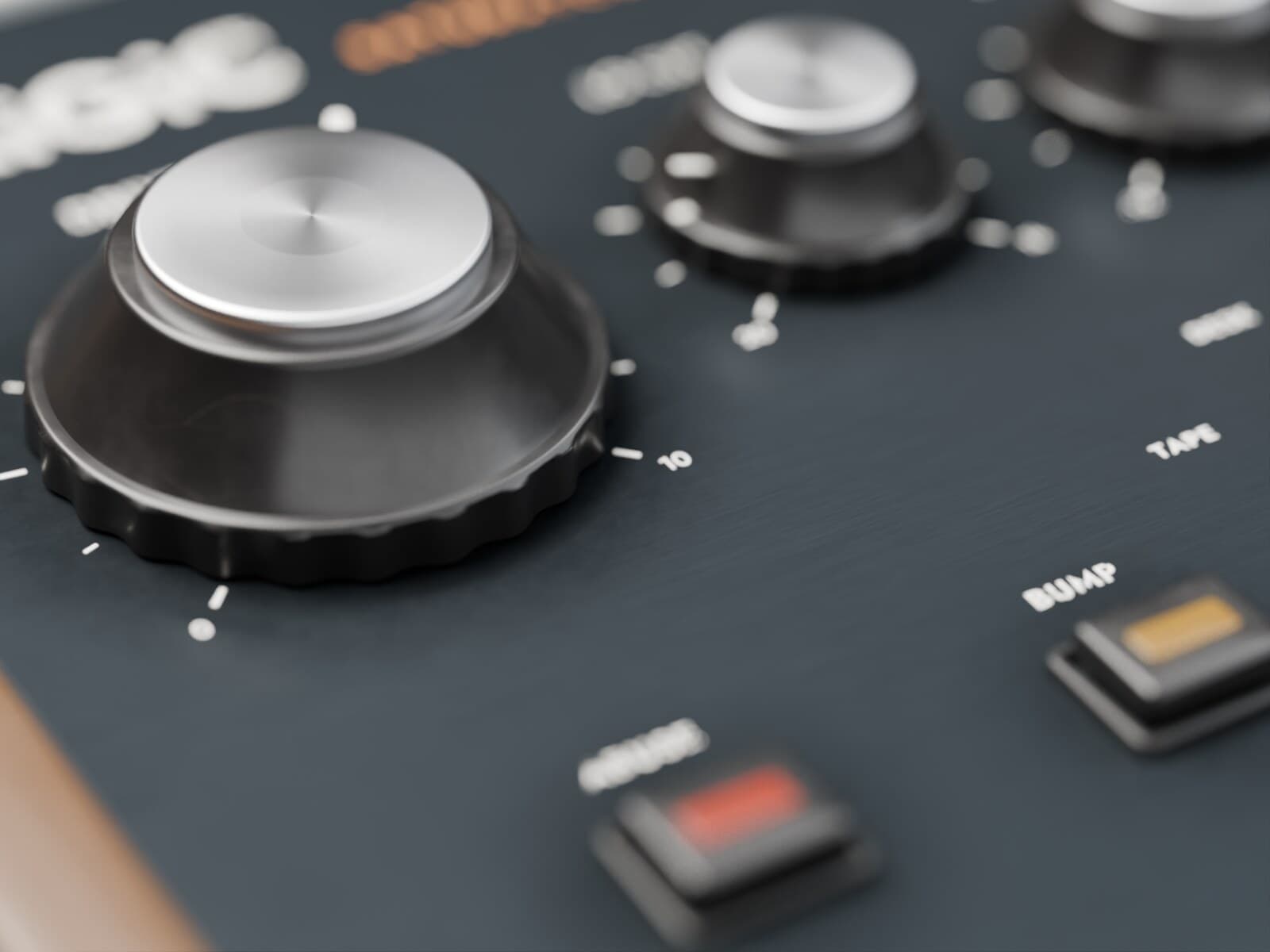
the three you will touch most
The circuits
five plates · each with ABUSE
Five different kinds of distortion, not five amounts of the same one. The plate takes the circuit's colour so a glance tells you which one you are hearing. Each is its own model, and ABUSE is a second model again.
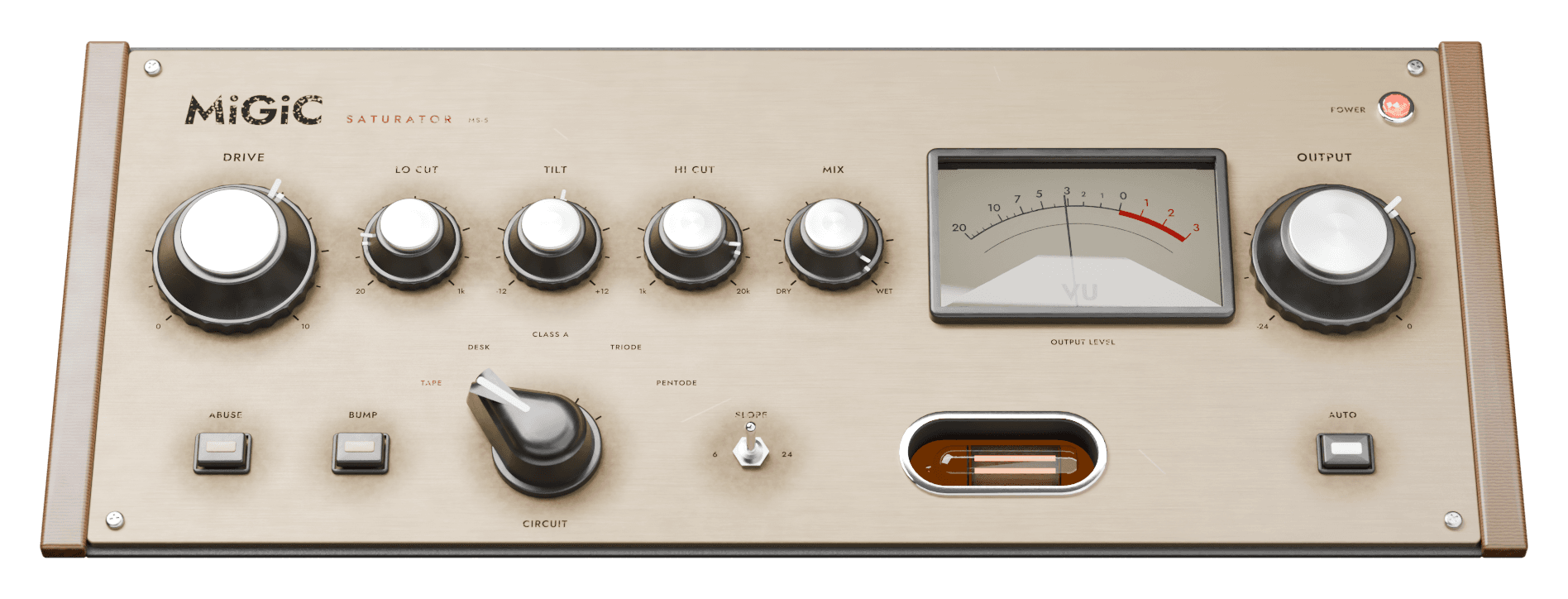
Tape machine input stage
TAPE
Soft, round, a little dark. The gentlest of the five; the one for a whole mix.
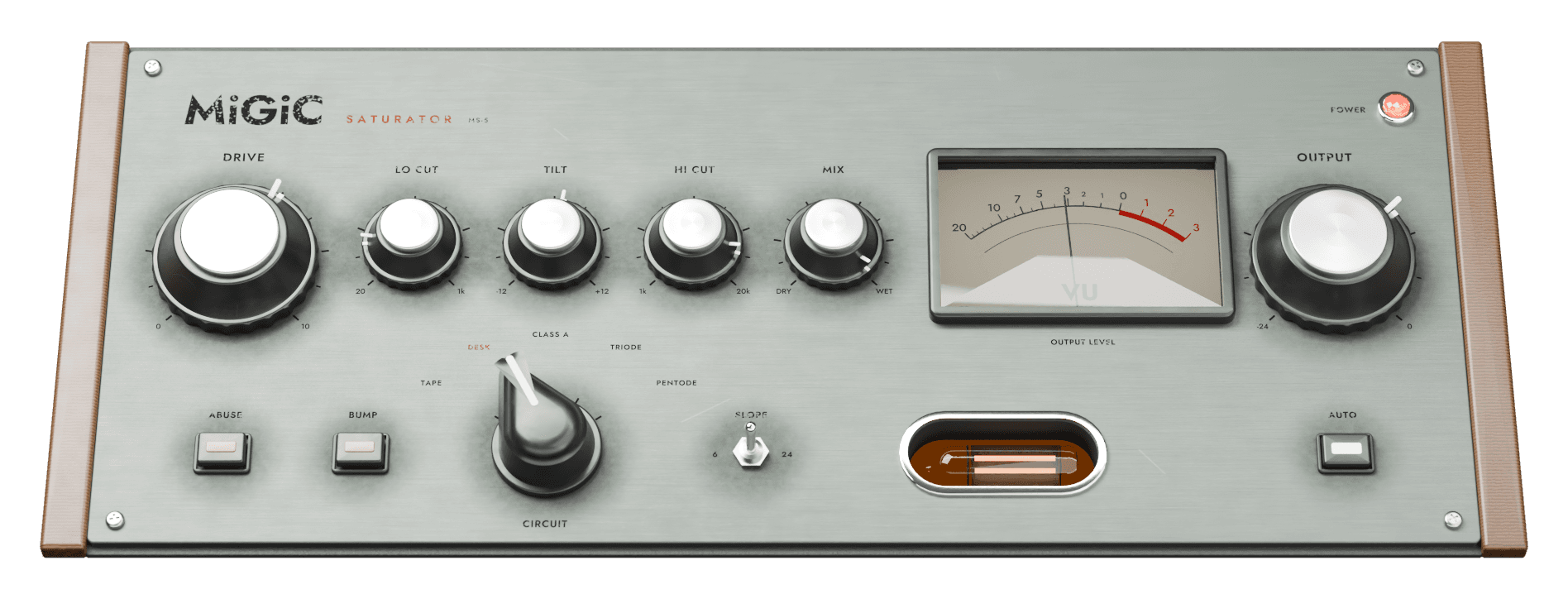
Console line stage
DESK
Grey-green and dry. Transformer-style thickening with a hard edge when pushed.
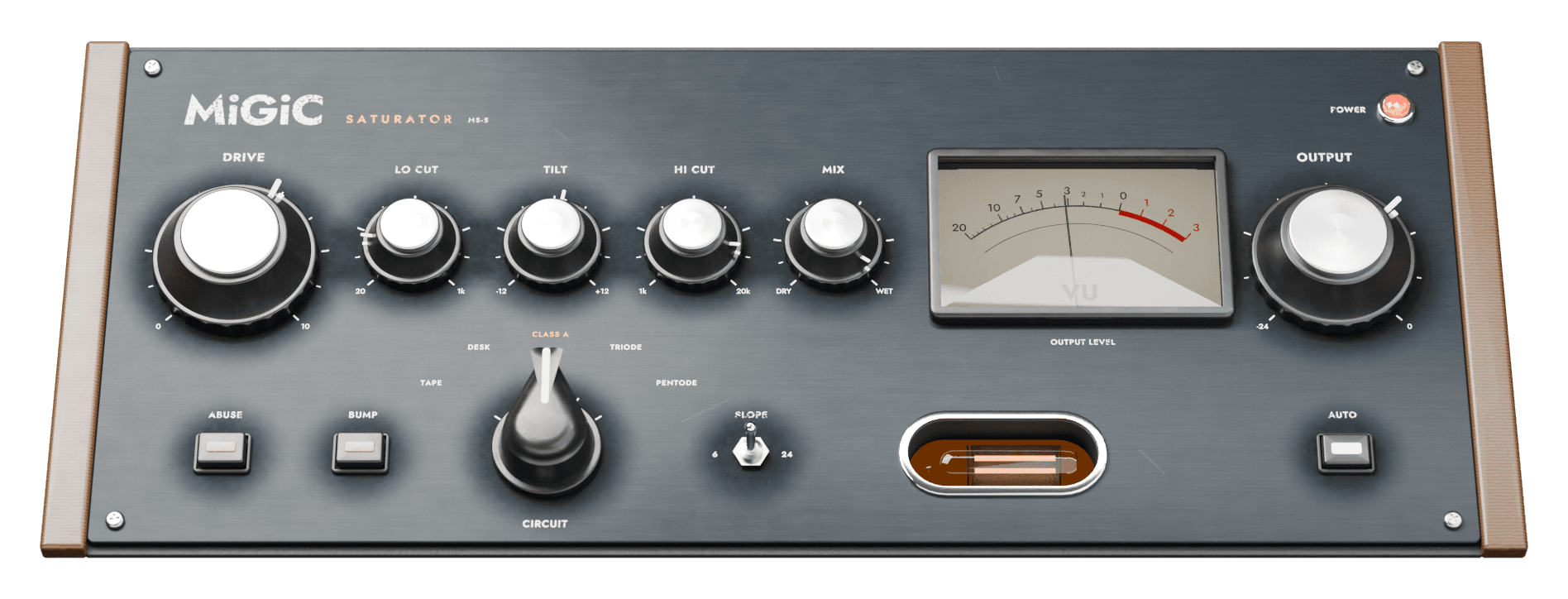
Class A microphone preamp
CLASS A
Warm, forward, musical at every drive setting. The default.
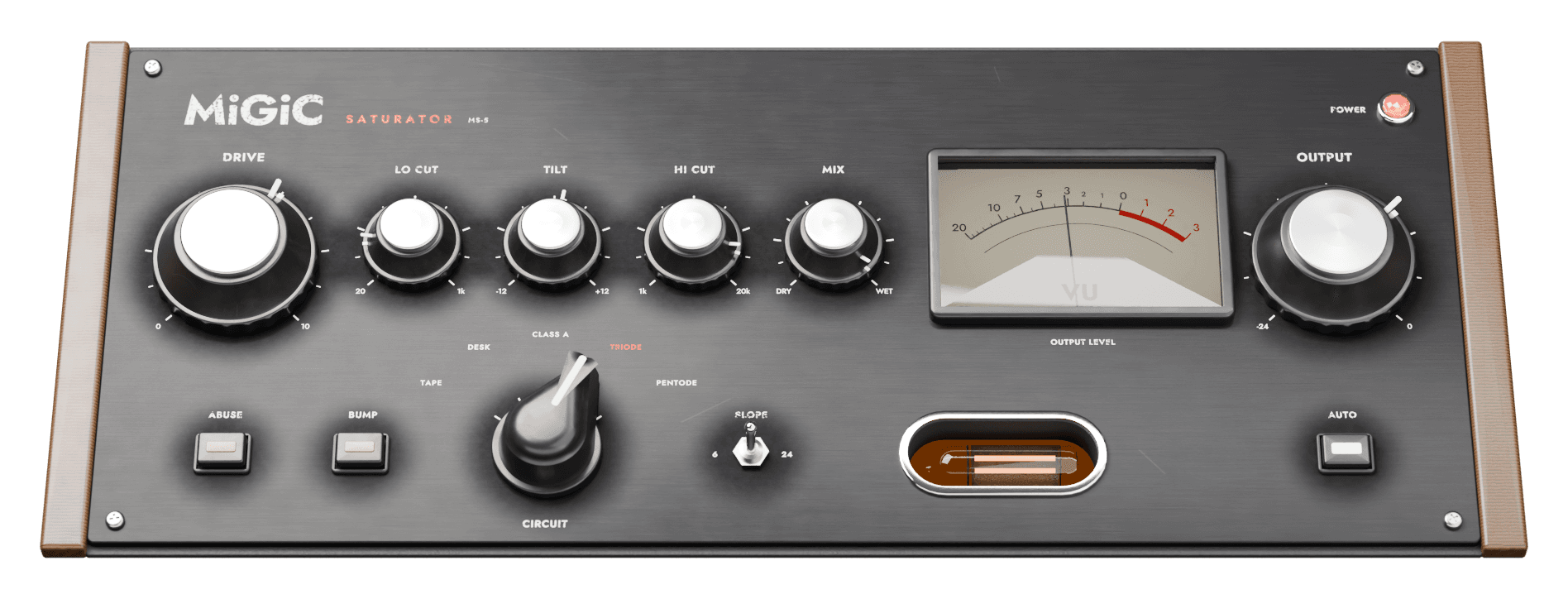
Valve stage, triode
TRIODE
Asymmetric and alive. Even harmonics first, then the bite.
Valve stage, pentode
PENTODE
Harder, brighter, closer to a fuzz. The one for drums and parallel crush.
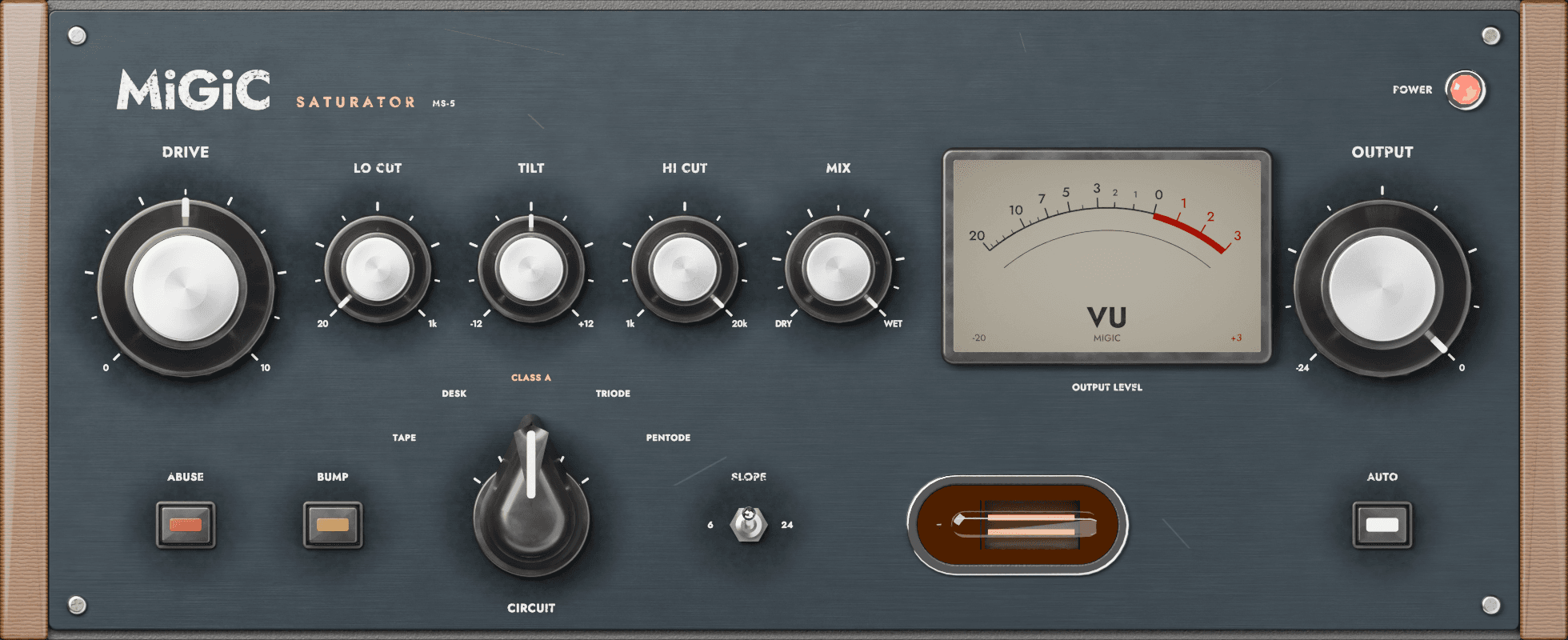
The default setting: CLASS A, DRIVE 3, AUTO on. Most sources take more DRIVE than you expect once AUTO holds the level; turn it until the top end starts to compress, then come back a little. LO CUT before the circuit keeps the low end from eating all the headroom; HI CUT after it tames what the drive adds up top.
Two finishes
cosmetic, nothing else
Controls
| CIRCUIT | The five circuits, on a chicken-head selector. The plate changes colour with it. |
|---|---|
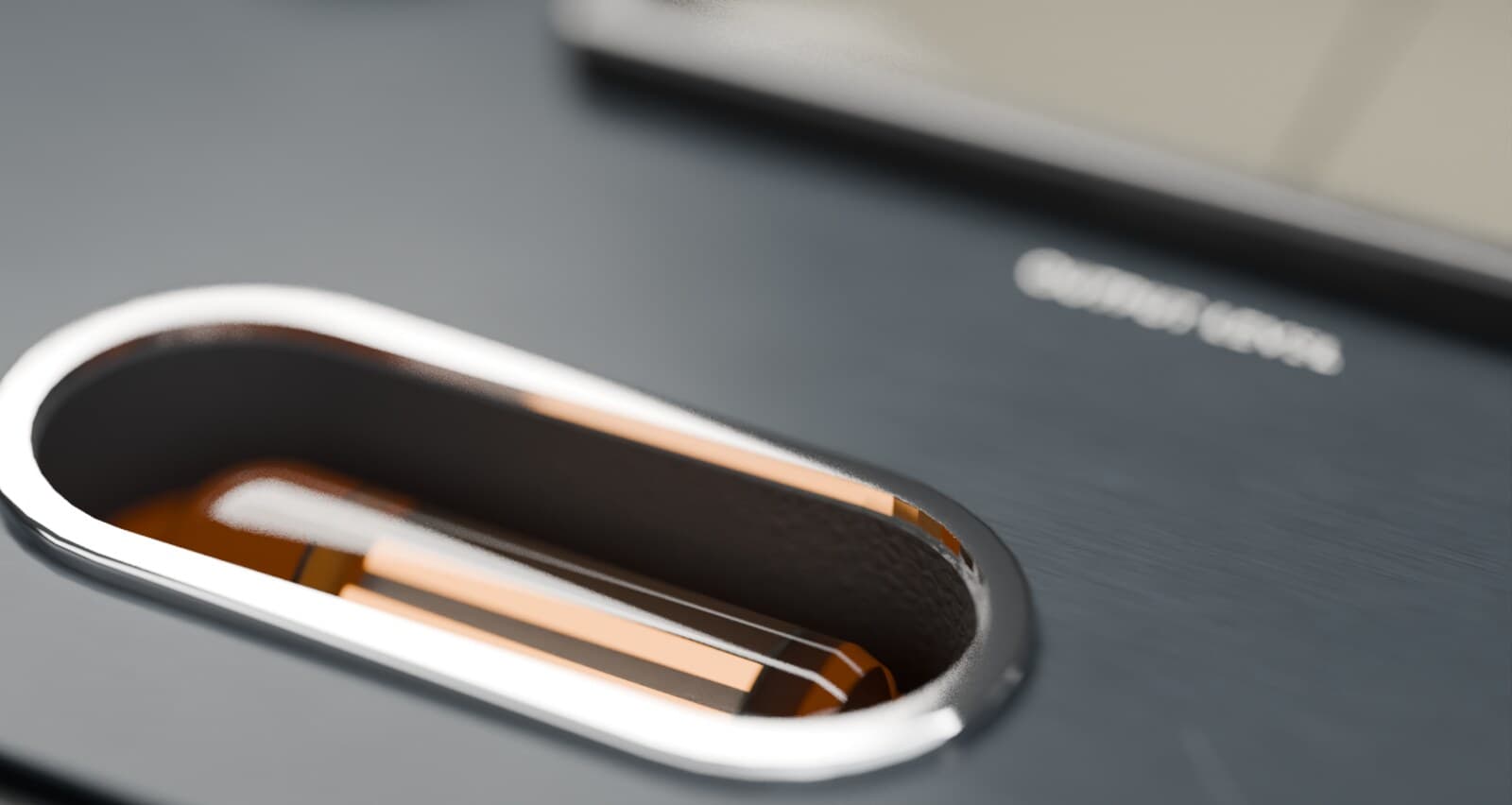
| DRIVE | Pre-gain into the circuit, 0 to 10. The valve window glows with it. |
| ABUSE | +14 dB and a different, harder nonlinearity: its own model per circuit. |
| LO CUT · BUMP | High-pass before the circuit, 20 Hz to 1 kHz; BUMP makes it resonant. |
| TILT | Dark to bright, ±12 dB, before the circuit. |
| HI CUT · SLOPE | Low-pass after the circuit, 1 to 20 kHz, 6 or 24 dB per octave. |
| MIX | Dry to wet, with the nonlinear pot law of the original hardware. |
| OUTPUT · AUTO | Trim after the circuit. With AUTO on it follows DRIVE and ABUSE, so turning up never gets louder. |
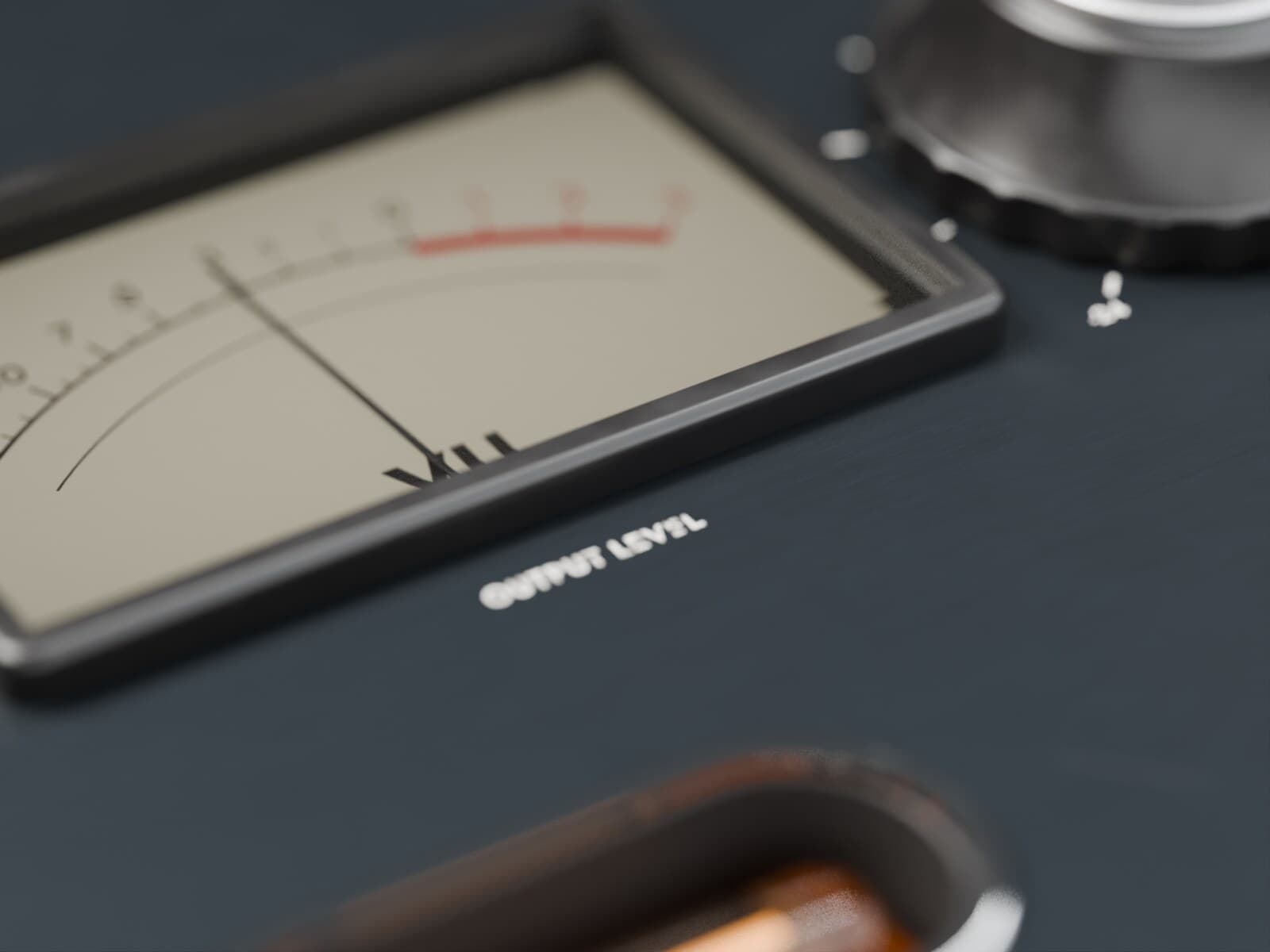
| VU | Output level, −20 to +3 VU, with proper ballistics. |
How it was made
Measured, not guessed
The filters, the drive law of each circuit, the mix pot and the latency are tables I measured. The saturation itself is a small learned model per circuit and ABUSE setting, trained on thousands of stimulus and response pairs from analogue stages, then checked on held-out stems at their natural level until the difference sat well below the music.
The models run at 48 kHz inside a resampler at any other rate, so the harmonics are the same in a 44.1 kHz session and a 96 kHz one. The panel is rendered in Blender from a 3D model of the unit; the knobs, the needle and the valve glow are frames of that same object.
The numbers
| Circuits | five, each with an ABUSE variant: ten models |
|---|---|
| Latency | 38 samples at 48 kHz, constant across circuits |
| CPU | about 8 to 13 % of one core per channel |
| Sample rates | any; the models run at 48 kHz inside a resampler |
| Formats | VST3 · AU · macOS, Windows, Linux |
| License | one-time purchase, a file, no phone-home |